From Literature to Scent: Sidonie Lancesseur on Crafting Envol and Éveil
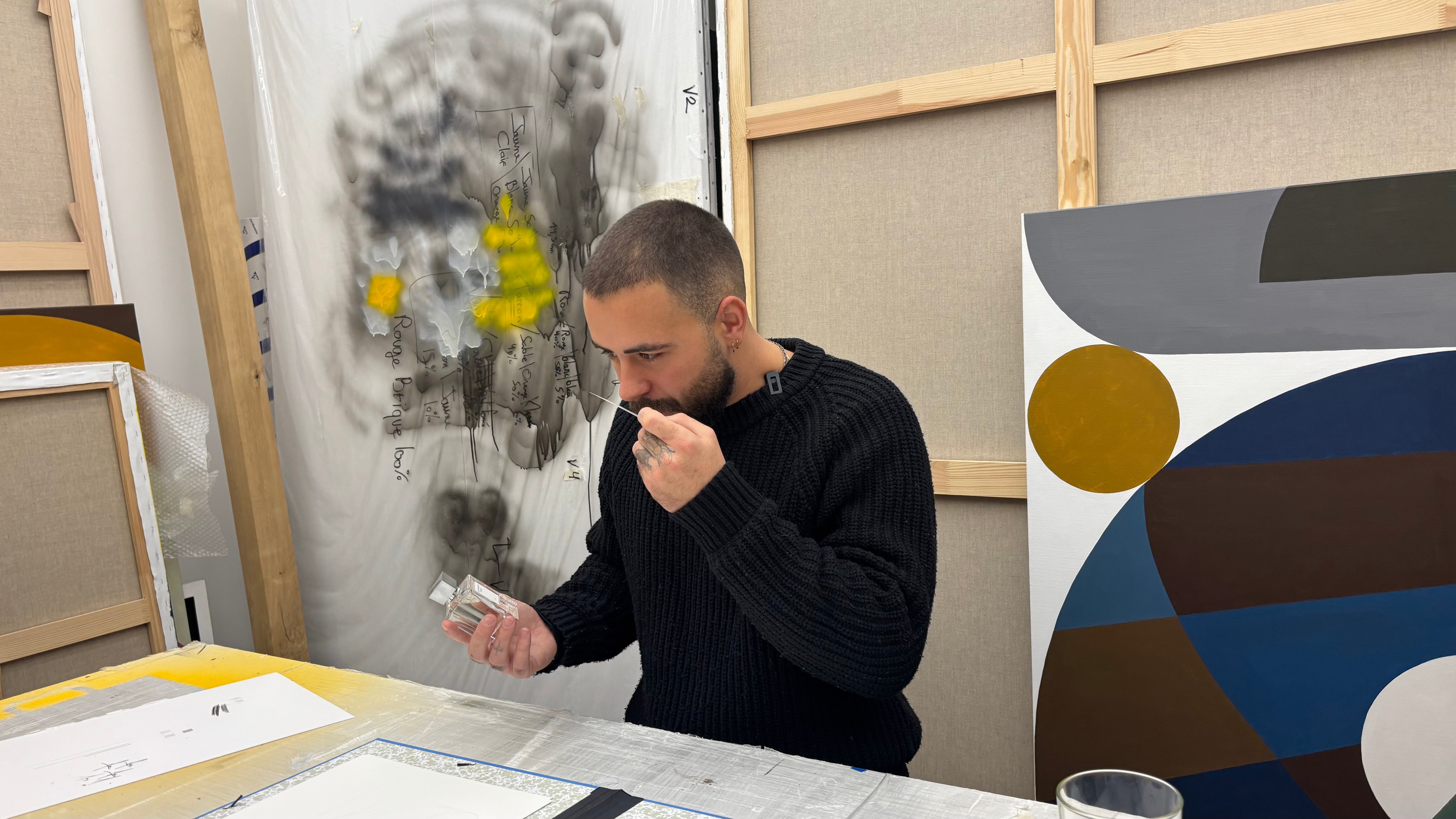
As a next proejct, Écrit et Parfum wanted to capture the narrative of Yi Sang’s The Wings through scent. The resulting fragrances, Envol (Flight) and Éveil (Awakening), reflect the contrasting textures of life and its differing endings.
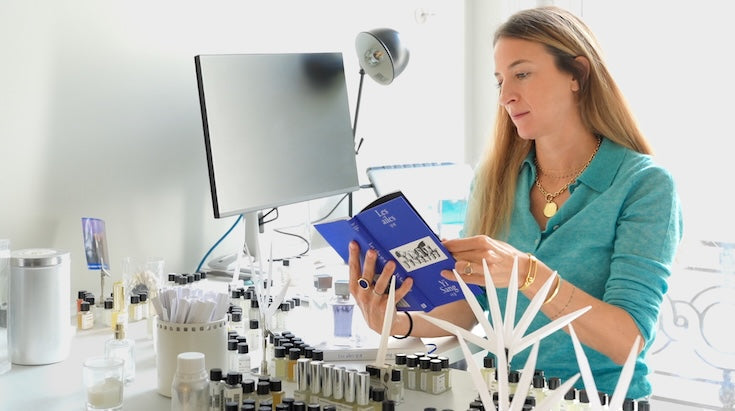
On a sunny autumn day, Garam, the founder of Écrit et Parfum visited the Robertet headquarters in Paris to meet perfumer Sidonie Lancesseur. A sole pupil of the modern master Michel Almairac, Lancesseur is celebrated for her delicate, modern interpretation of natural raw materials.
They discussed her creative process and reflections on translating The Wings into Envol and Éveil.
Interview with Sidonie Lancessuer

Q. Could you briefly introduce yourself?
A: I am Sidonie Lancesseur. I have been a perfumer at Robertet for over 20 years.
I create fragrances for many brands, and most recently, I developed Envol and Éveil for Écrit et Parfum.
Q. Had you read Korean literature before this project?
A: No, I hadn't. And discovering The Wings was a fascinating yet unsettling experience.
I found myself immersed in the narrator’s disturbing, rhythmic world. It opened a literary door unlike anything I had experienced before.

Q. What were your first impressions of this project?
A: I knew using The Wings as a starting point would be a difficult challenge. Translating the psychological atmosphere of a fragmented self into a single scent is complex.
Instead of drawing from a simple memory or visual, I had to explore the protagonist's inner turmoil - the tension between his "stuffed" stagnation and his longing for flight.
Q. Why did you decide to collaborate with Écrit et Parfum?
A: I was drawn to the challenge of interpreting 1930s Korean literature.
The protagonist’s struggle with anxiety and identity still resonates deeply today. I was especially captivated by the idea of making the fragrance structure "dialogue" with the narrative. Specific passages provided sensory cues; for instance, the description of the wife’s scent suggested a duality of softness and tension.
Q. What was the most difficult part of the process?
A: It was translating the opening line: "Do you know the genius who has become a stuffed specimen?"
This sentence evokes a cold, lifeless shell where a creative soul is frozen. Representing that sense of void and inner rigidity through olfactory chords was very demanding.
Q. Which line from the novel touched you the most?
A: "When the exotic, sensual fragrance seeps into my lungs, I feel my eyes closing naturally. It is surely a fragment of my wife’s body odor."
This immediately brought to mind a woman from the 1930s, heavily made-up, oscillating between seduction and vulnerability.
I envisioned an "overloaded palette": vintage powder, creamy iris butter, spicy jasmine, and the skin-like warmth of ambrette. I used these to recreate a world of hidden desires and forced fate.

Q. How did you structure the sensory journey?
A: I designed the olfactory notes to mirror the protagonist’s psychological evolution. While both scents share a common narrative flow, they offer distinct interpretations through their specific ingredients:
-
Top Notes: Sharp, metallic accents like Aldehydes represent the "stuffed specimen," a frozen identity in a room of compressed air.
-
Middle Notes: Florals and Iris Butter evoke the wife’s 1930s vanity, balancing purity with unspoken desire.
-
Base Notes: Skin Musks and Cashmere Wood symbolize "wings" and the internal longing to break through invisible walls.
Envol: The White Feather
-
-
Top Notes: Aldehydes & Cardamom (The Stuffed Self)
-
Middle Notes: Lily of the Valley & Iris Butter (Pure 1930s Elegance)
-
Base Notes: Skin Musks, Ambroxan & Cashmere Woods (White Feathers)
-
Éveil: The Ash-Colored Wing
-
-
Top Notes: Aldehydes & Ambrette (The Stuffed Self)
-
Middle Notes: Egyptian Jasmine Absolute, Iris Butter & Cosmetic Powder (Opulent 1930s Vanity)
-
Base Notes: Incense, Balsam, Vanilla & Cashmere Woods (Ash-Colored Wings)
-
Q. How did you interpret the ending?
I saw the final cry "Wings, sprout again! Let’s fly!" as a bridge between tragedy and salvation. It is a spark of hope. And I imagined the protagonist being embraced by clouds rather than falling.
I expressed this with warm musk and cashmere wood, capturing both comforting warmth and the vertigo of ascent.
Q. How does Écrit et Parfum’s mission to give literature a "second life" through scent resonate with you?
Écrit et Parfum gives literature a second life, allowing stories to travel beyond the page. It is a tribute to the author and an opening for the reader.
I am very curious to see which work will be transformed into scent next.